Principal Investigator: Dr. Constantin Wurthmann specialises in electoral behaviour and political representation, with a particular focus on the political behaviour of sexual and gender minorities. His research lies at the intersection of comparative politics and political sociology and is characterised by a strong empirical emphasis on survey research. He is the Principal Investigator of the ERC Starting Grant project Making the Queers Visible: Partisanship and Support among Sexual and Gender Minorities in Eastern and Western Europe (VisibleQueers), awarded in September 2025.

Research Associate: Mara Wiegmann is currently a PhD student at Johannes Gutenberg University Mainz whose work centres on marginalisation, discrimination, and their political consequences, with a particular focus on sexual and gender minorities as well as ethnic minorities. Her research connects political science and social psychology, combining quantitative and qualitative methods to study how stereotypes and discrimination shape political attitudes and participation. She is a researcher in the ERC Starting Grant project VisibleQueers.

Research Assistant: Jonas Schorpp, B.A., holds a Bachelor’s degree from the University of Mannheim. His studies focus on EU politics and Europeanisation, public policy and governance analysis, with a particular interest in public opinion and political behaviour. He has also developed a strong interest in migration and minority research. Methodologically, he focuses on quantitative methods, data preparation, and survey-based empirical analysis.

Research Assistant: Dominik Schrenk
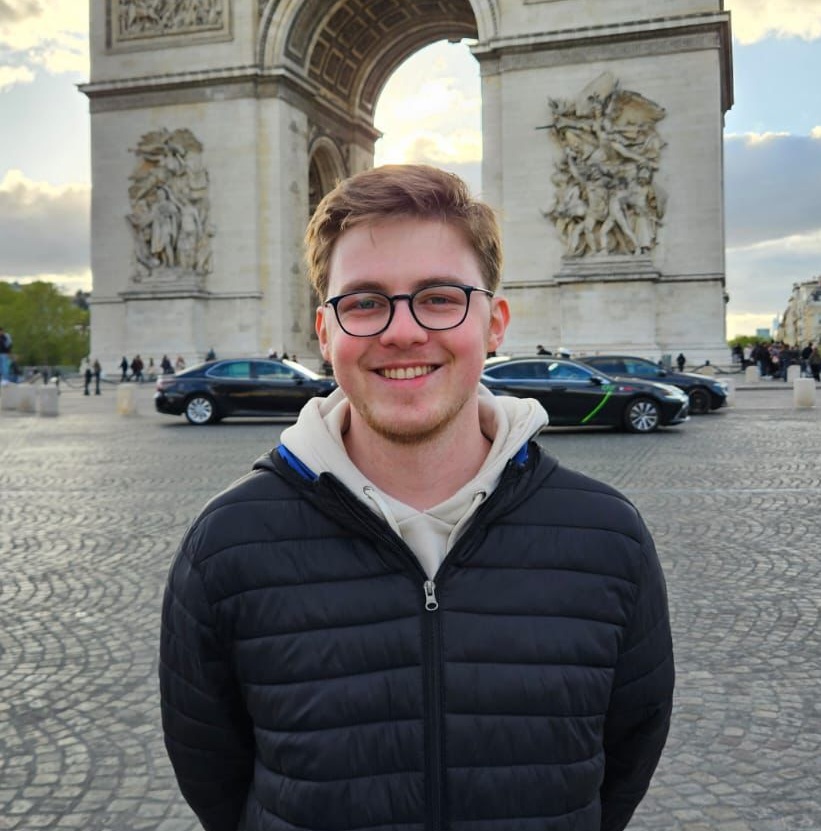
Research Assistant: Philipp Marx, B.A., is a research assistant at Johannes Gutenberg University Mainz and a member of the working group Political Behaviour and Representation. He is currently pursuing a Master’s degree in Political Economy and International Relations, following a Bachelor’s degree in Theater Studies and Political Science. His research focuses on the semiotics of political movements and the role of visibility in identity formation, with a particular interest in the broader Eastern European region.

 Prof. Dr. Constantin Wurthmann